

Branding is more than a logo or slogan. it is how customers recognize and connect with your business.
A strong brand builds trust, creates emotional bonds, and turns customers into loyal advocates through consistent identity and meaningful experiences.
What is Branding?
Branding is the process of creating a unique identity for your business through visuals, messaging, and experience.
Branding includes your logo, colors, typography, messaging, tone of voice, and overall customer experience.
Effective branding communicates your company’s values and helps customers understand what makes your business different from competitors.
The Connection Between Branding, Trust, and Loyalty
Branding acts as a bridge between businesses and customers by creating emotional and practical connections.
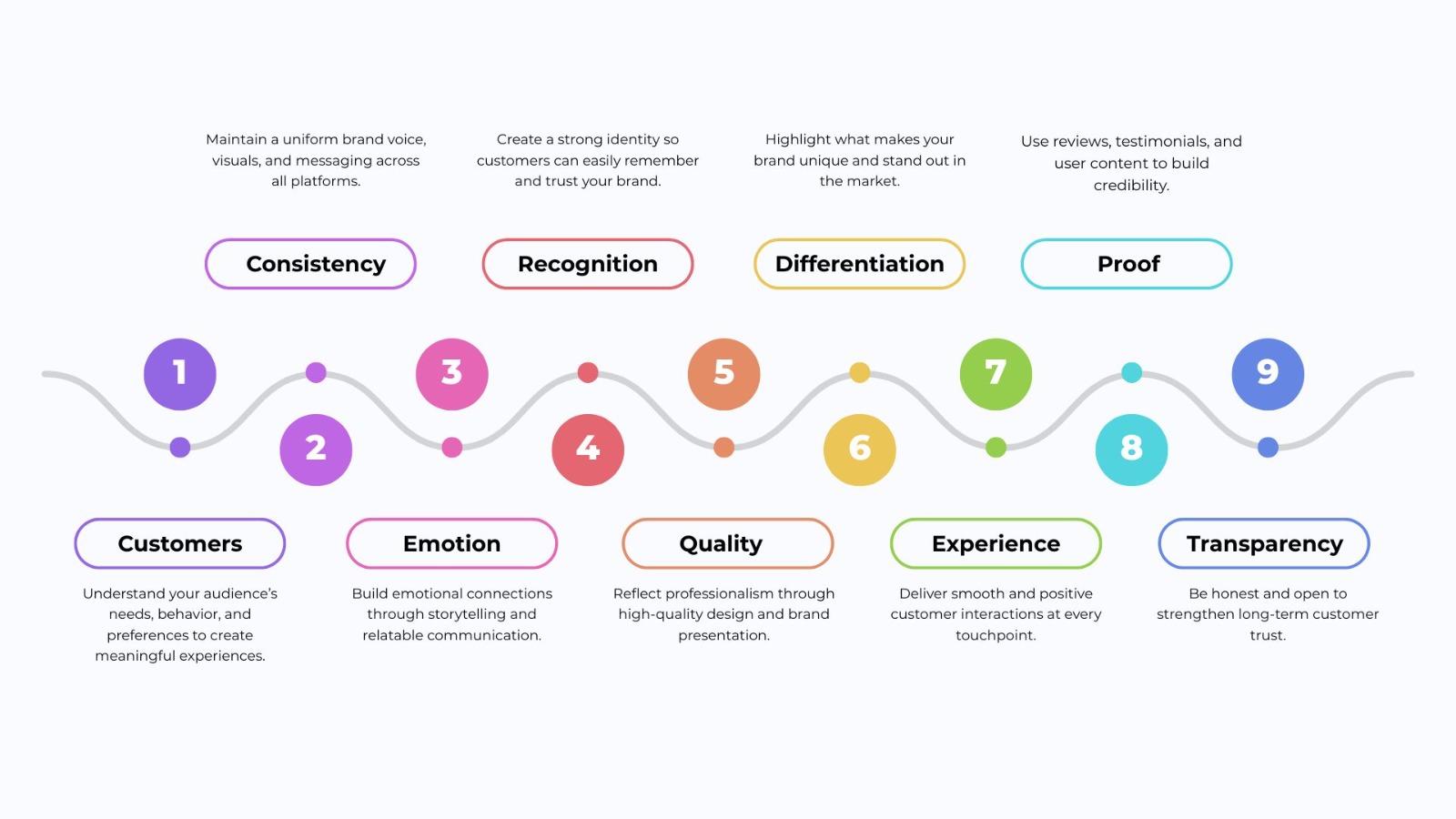
Customer trust and loyalty are built through consistent and meaningful experiences.
When customers trust a brand, they are more likely to make repeat purchases and recommend the business to others.
1. Consistency Creates Reliability
Consistency is a key factor in building trust.
When your brand maintains a uniform look, tone, and message across all platforms, customers begin to recognize and rely on it.
Whether someone visits your website, social media pages, or interacts with your customer support, a consistent experience reassures them that your brand is dependable.
This consistency strengthens brand trust and loyalty over time.
2. Emotional Branding Builds Strong Connections
People don’t just buy products; they buy experiences and emotions.
Brands that connect emotionally with their audience tend to build stronger relationships.
Through storytelling, relatable messaging, and shared values, businesses can create meaningful connections.
When customers feel understood, they are more likely to stay loyal.
This is why customer loyalty through branding is often driven by emotional engagement rather than just product features.
3. Brand Recognition Boosts Confidence
Familiarity leads to trust.
When customers repeatedly see and recognize your brand, they feel more comfortable choosing it over unfamiliar options.
Strong visual identity, clear messaging, and consistent presence help improve recognition.
Over time, this recognition reduces hesitation and builds confidence in your brand.
4. Perceived Quality Influences Trust
Your branding directly impacts how customers perceive your quality.
A professional and cohesive brand image suggests that your business is credible and trustworthy.
On the other hand, poor or inconsistent branding can make even a good product seem unreliable.
Investing in high-quality branding improves customer trust in branding and enhances your reputation.
5. Differentiation Builds a Unique Identity
Standing out in a crowded market is essential.
Branding helps define what makes your business different from competitors.
A clear unique selling proposition (USP) communicated through your branding helps customers understand why they should choose you.
This differentiation strengthens branding and customer loyalty by making your business more memorable.
6. Customer Experience Strengthens Brand Trust
Every interaction a customer has with your business contributes to your brand image.
From browsing your website to receiving a product, each touchpoint matters.
A smooth and positive experience reinforces trust and encourages repeat purchases.
Businesses that focus on delivering consistent and high-quality experiences naturally build stronger loyalty.
8. Transparency Builds Long-Term Relationships
Honesty and openness are essential for building trust.
Customers appreciate brands that are transparent about their practices, pricing, and values.
Admitting mistakes and addressing issues openly can actually strengthen your reputation.
Transparency helps establish deeper and more lasting relationships with your audience.
9. Loyalty Leads to Business Growth
When customers trust your brand, they are more likely to return and recommend it to others.
Loyal customers become advocates who help grow your business organically.
Benefits of strong customer loyalty include higher repeat purchases, increased customer lifetime value, and more word-of-mouth referrals.
This highlights the importance of branding in business success.
- Higher repeat purchases
- Increased customer lifetime value
- More word-of-mouth referrals
10. Branding Improves SEO Performance
Branding also plays a role in digital visibility.
A strong brand encourages more clicks, repeat visits, and direct searches, all of which are positive signals for search engines.
Including relevant keywords like how branding builds trust and brand trust and loyalty in your content can further improve your rankings and help your blog reach a wider audience.
Conclusion
Branding is much more than a design element; it is a strategic tool that shapes customer perception, builds trust, and drives loyalty. Businesses that invest in strong, consistent, and authentic branding are more likely to create lasting relationships with their customers.



7. Social Proof Enhances Credibility
Customer reviews and testimonials are powerful branding tools.
They provide evidence that your brand delivers on its promises.
When potential customers see positive feedback, it reduces doubt and builds trust.
Encouraging user-generated content and reviews can significantly boost your credibility and influence buying decisions.